


The 3 best things you can do for turnout gear

WASH YOUR GEAR BEFORE YOU PUT IT INTO SERVICE
I know that new gear looks a little too pretty right out of the box and you want to dirty it up, but the best thing you can do for a new set of turnout gear is to wash it. Putting a new set of gear in the washer causes the threads to slightly shrink which actually tightens the stitching. This not only strengthens the abrasion and tear resistance of the fabric, but it also increases the heat protection. Thermal Protective Performance is a measurement for the rate at which convective and radiant heat penetrate through the composite system – outer shell, thermal liner, and moisture barrier – to cause second-degree burns to the human skin. Washing a new set of turnout gear can increase the TPP rating of your gear by as much as 8-10 points.
Additionally – combustibles, solvents, carcinogens and other dirt and fluids from fire scenes can become embedded in turnout gear. This is not only hazardous to your health, but also breaks down the fibers in the fabric of your gear. For these reasons it is very important to wash your turnout gear thoroughly, and on a regular basis.
KEEP YOUR GEAR OUT OF THE SUN
Superman had Kryptonite. Achilles had his heel. Troy had the Trojan horse. All great things have their weakness. Ultra violet (UV) rays are the “Kryptonite” to turnout gear fabric. Hanging it in a gear locker in the firehouse is not enough to protect it.
How firefighting clothing is stored has a direct impact on its life and effectiveness as a protective tool, says Kim Henry, marketing representative for Celanese Acetate’s PBI Products Division. “Improper storage in the sun degrades the fiber,” says Henry. The breakdown occurs mainly as a result of UV exposure through windows as clothing hangs on racks and on the apparatus in firehouses. “We suggest that firefighters store protective clothing in lockers or garment bags,” Henry urges.
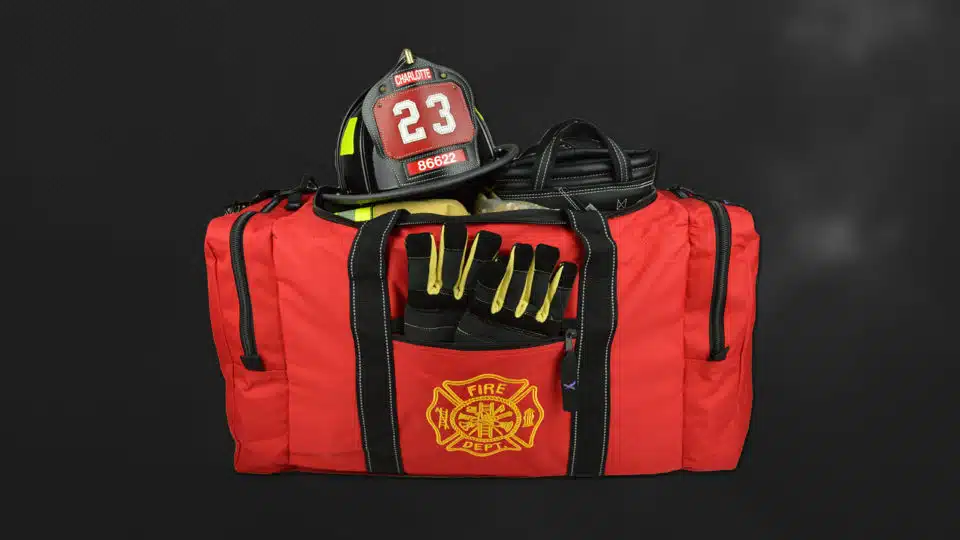
Because UV rays still penetrate through the bay doors of the firehouse and the windows of a fire apparatus, a gear bag is the best way to protect your gear.
LET YOUR GEAR AIR OUT AFTER A CALL
Most gear bags on the market are made of either nylon or polyester. Putting your gear back in a bag after a call where the gear has become damp is asking for trouble. Mold and mildew thrive in environments like this. Not only does your gear stay wet and contaminated, but those fluids can also soak into the gear bag. There are a few gear bags on the market now that have a mesh cutout on the rear of the bag with a nylon flap over it. While great in theory, anyone in the fire industry knows that this provides no cross ventilation for air to move.
At Lightning X, we have designed a bag to circumvent that problem. Our LXFB45M Quad Vent series gear bags have four uniquely placed mesh vent channels that promote full cross ventilation, which allows for gear to air out and dry. The mesh vents and the fabric are both coated to prevent any moisture or chemicals from soaking into the fabric of the bag. The Quad Vent gear bags have been deployed in several top 20 city fire departments in the U.S., and worldwide.
Contact Lightning X today to learn more about how we can help protect your turnout gear investment, and make your gear last longer!
Frequently Asked Questions
Yes. Washing a new set of gear slightly shrinks the threads, which tightens the stitching and improves abrasion and tear resistance. It can also raise the gear’s Thermal Protective Performance rating by as much as eight to ten points, so a quick wash makes brand-new gear both stronger and safer.
Wash it on a regular schedule and always after any significant exposure to smoke, soot, or contaminants. Combustion byproducts, solvents, and carcinogens embed in the fabric, which is hazardous to your health and breaks down the fibers, so routine, thorough cleaning protects both you and the lifespan of your gear.
Yes. Ultraviolet light breaks down the aramid fibers in the outer shell, making them brittle, faded, and weaker over time. What looks like simple fading often means the fabric’s thermal resistance has been reduced, so keep gear out of direct sun and store it in a gear bag when it is not in use.
Wash a new set before putting it into service, keep it out of direct sunlight, and clean and air it out after every call so contaminants do not embed in the fabric. Storing gear in a dedicated bag away from UV and fumes protects both its strength and its thermal protection.


 Accessories
 Gear Bag Accessories
 Glove Straps
 Med Pouches
 SCBA Mask Bags
 Small Bags & Kits
 Clearance
 Embroidery
 Personalized EMT Bags
 Personalized Firefighting Bags
 Personalized Patches
 FireFighting Bags
 Bags Under $60
 No Logo Gear Bags
 Package Deals
 Rescue Bags
 Rolling Gear Bags
 SCBA Mask Bags
 Step-In Turnout Bags
 First Responder Kits
 Backpack/Sling Kits
 Beginner Kits
 Everyday First Aid Kits
 Intermediate Kits
 Kits under $150
 Kits w/ Oxygen
 OSHA First Aid Kits
 Portable First Aid Kits
 Stocked Kits
 Tactical Trauma Kits
 Custom Kit Builder
 Medical Bags
 Backpacks & Slings
 Basic EMT Bags
 Bags Under $60
 IFAKs & Pouches
 Modular EMT Bags
 Oxygen Bags
 TacMed Bags
 New
New Supplies
 Airway & Breathing
 Bleeding/TacMed
 Diagnostic
 First Aid & Meds
 Gauze/Bandages
 Hemostatic
 Instruments / Misc
 Med Pods & Mini Kits
 Splinting/Immobilization
 Tactical Bags
 Backpacks & Slings
 Fire Police Bags
 IFAK Pouches
 Law Enforcement Bags
 Tactical Accessories
 Tactical Trauma Kits
 Backpacks & Slings
 Kits w/ QuikClot
 Refill Kits
 Small Kits + IFAK’s